
50 Percent Chance Beats 100 Percent Loss
Key illuminated insight
A deer fell through the ice on a lake and could not get out. The fire department would not come. Animal services would not come. Two men decided that a fifty percent chance of surviving the rescue was better than the certainty of watching her drown, so they figured it out with the tools they had. She lived. The same calculation sits in front of every founder whose marketing is not working. The status quo is not neutral. It is a choice. And it is the one choice that guarantees the outcome you are already not happy with.
Step into full illumination
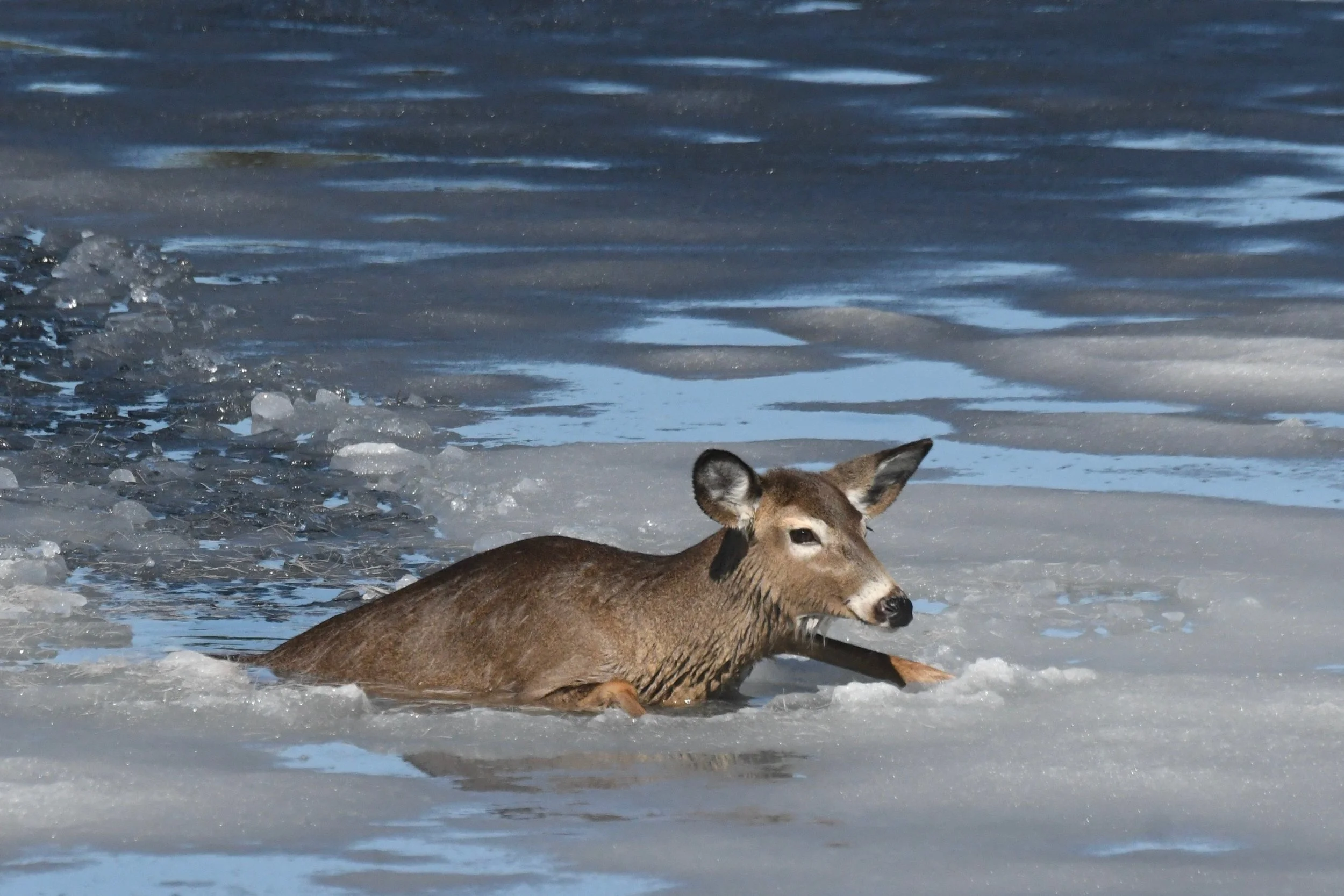
The text came in with a photo attached. A deer. Flailing in the middle of a lake. Surrounded by melting spring ice.
The message underneath read: Wish me luck. I love you all.
My husband and his friend had spotted the deer from shore. She had fallen through the ice and could not get herself out. They watched her struggle. They called the fire department. The fire department would not come. They called animal services. Animal services would not come. So the two of them stood on the edge of the lake and made a decision.
They were going to try.
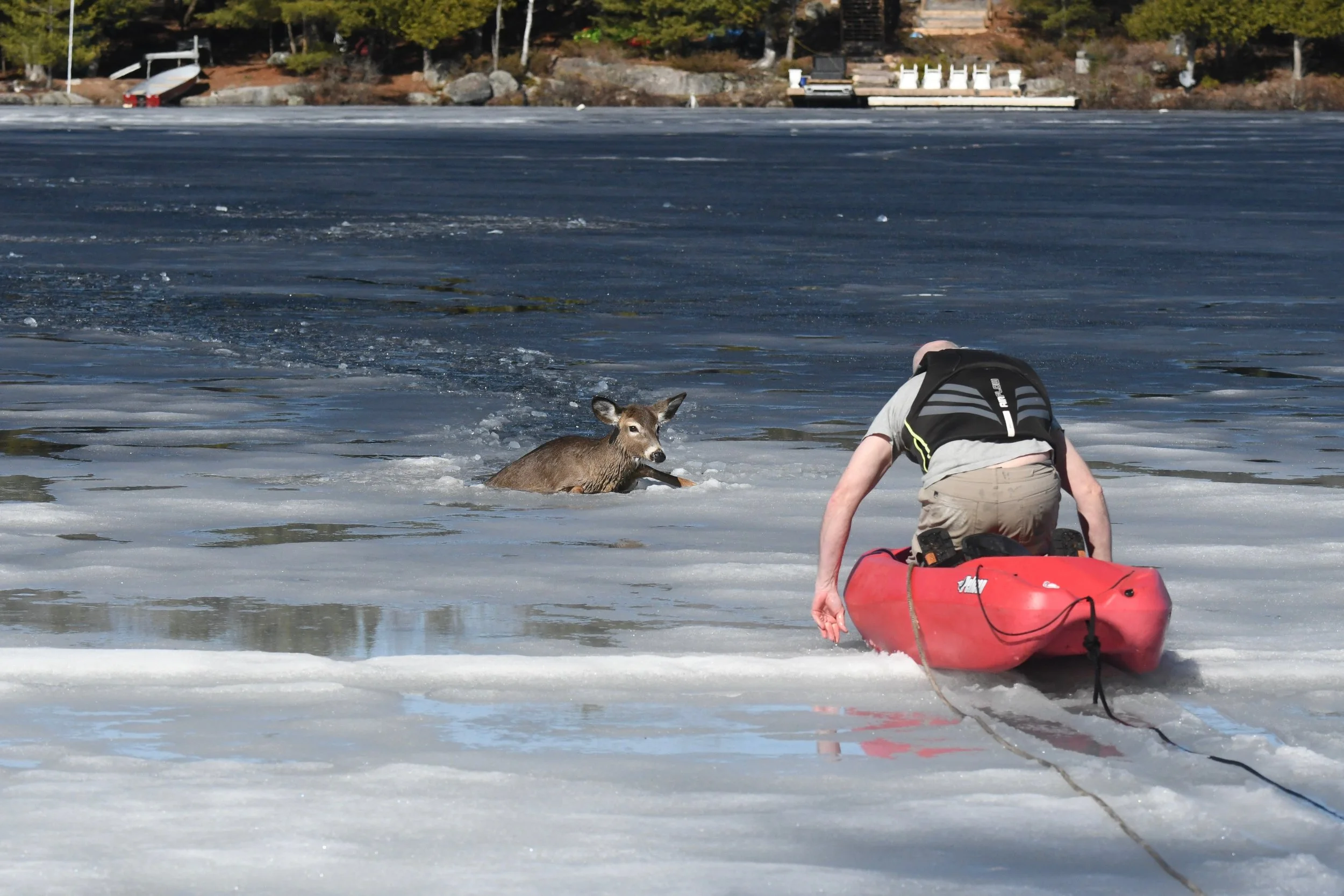
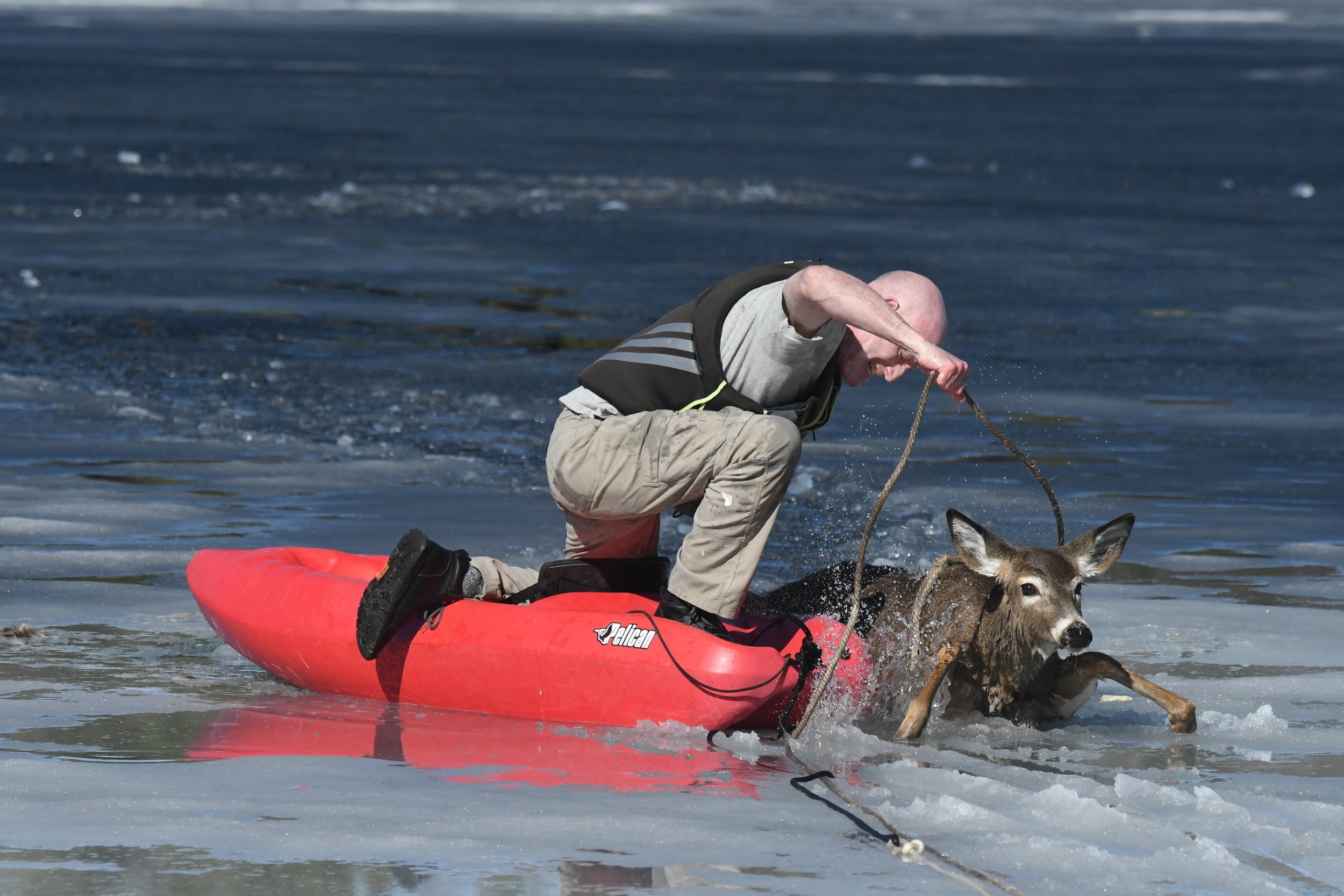
What followed was hours of failed attempts. Ropes that would not reach. Boats that could not cross. Kayaks that skidded on the ice but could not get close enough. My husband eventually got himself onto a plastic kayak, slid across the half-frozen surface, and tied a rope around the deer. Then his friend hauled her to shore.
Here is the part that still makes me laugh and shake my head at the same time. They tied the safety rope to the kayak, not to my husband. If he had gone through the ice, the rope would have saved the plastic boat. Not the man inside it. I will come back to that decision. It matters more than it looks.
They got her out. She was alive. She was breathing. And according to the wildlife guidance we read while all of this was happening, she had about a fifty percent chance of surviving the night.
Why Saving Her Was Only Half the Fight
Deer have two responses to extreme stress that often kill them even after the immediate danger is gone. The first is called capture myopathy. It is a condition where the stress of being handled causes the animal's own muscles and organs to break down. The damage can happen hours or days after the event. The second is tonic immobility, a kind of involuntary shutdown where the animal freezes, stops moving, and sometimes does not come back from it.
The rescue itself can kill them. The fear, the handling, the exertion of fighting for their life. The body keeps running the stress response even after the threat is gone, and it burns itself out.
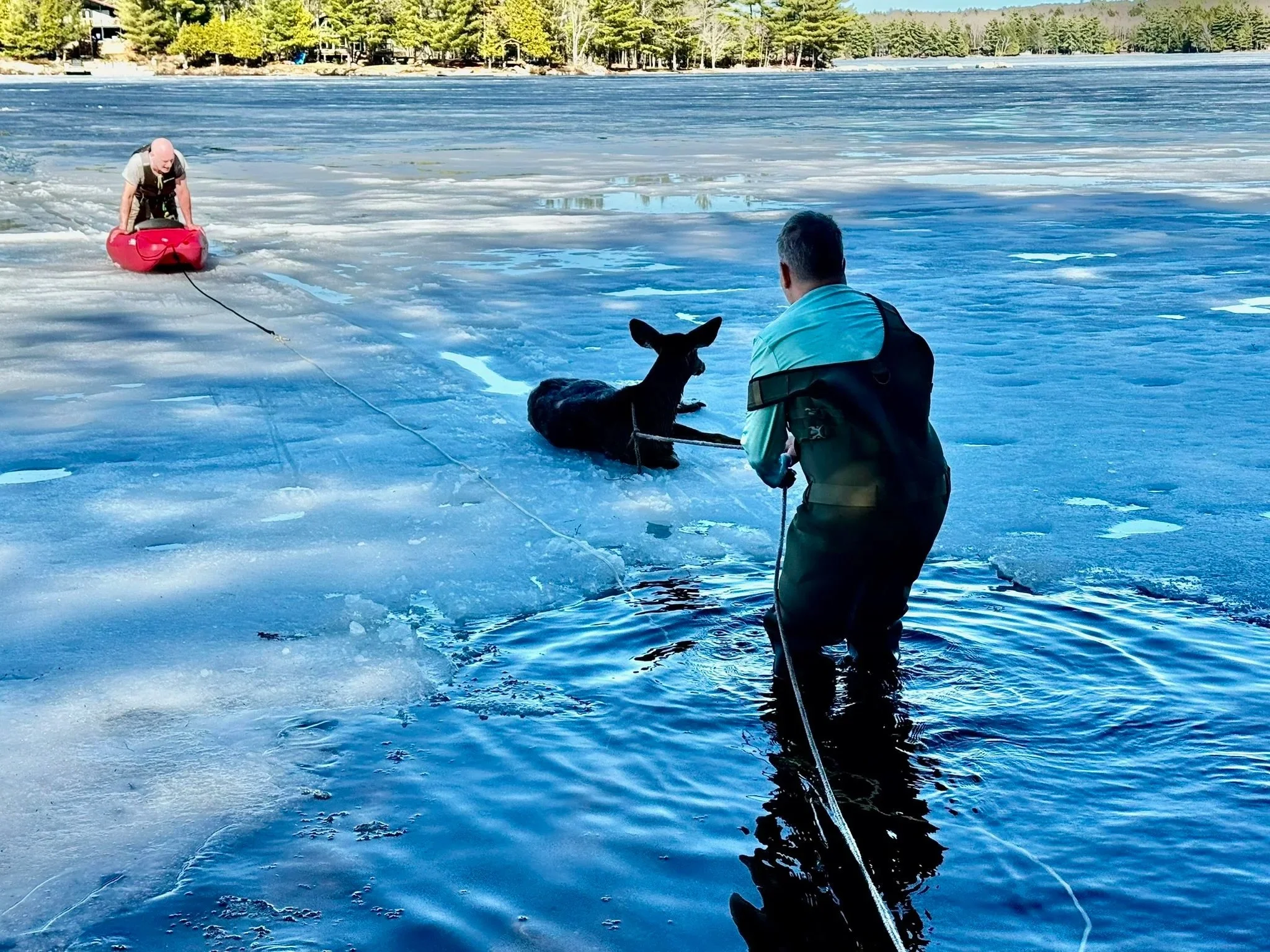
So the men finished pulling her to shore, wrapped her in a blanket, and felt like the job was done. The ladies, watching from a distance, knew better.
We started giving instructions. Get animal services to come pick her up. They still would not. Give her corn and soybeans. Keep her warm. Build her a fire. That last one got a laugh, but we were only half joking. The deer was wet. The ground was cold. She was not out of danger.
I woke up before the sun was up. Did she make it?
The next morning, the deer was gone. The corn was eaten. There was no trail, no blood, no sign of a body in the woods. She had gotten up and walked back into the forest. As far as we can tell, she survived.
Then Came the Argument
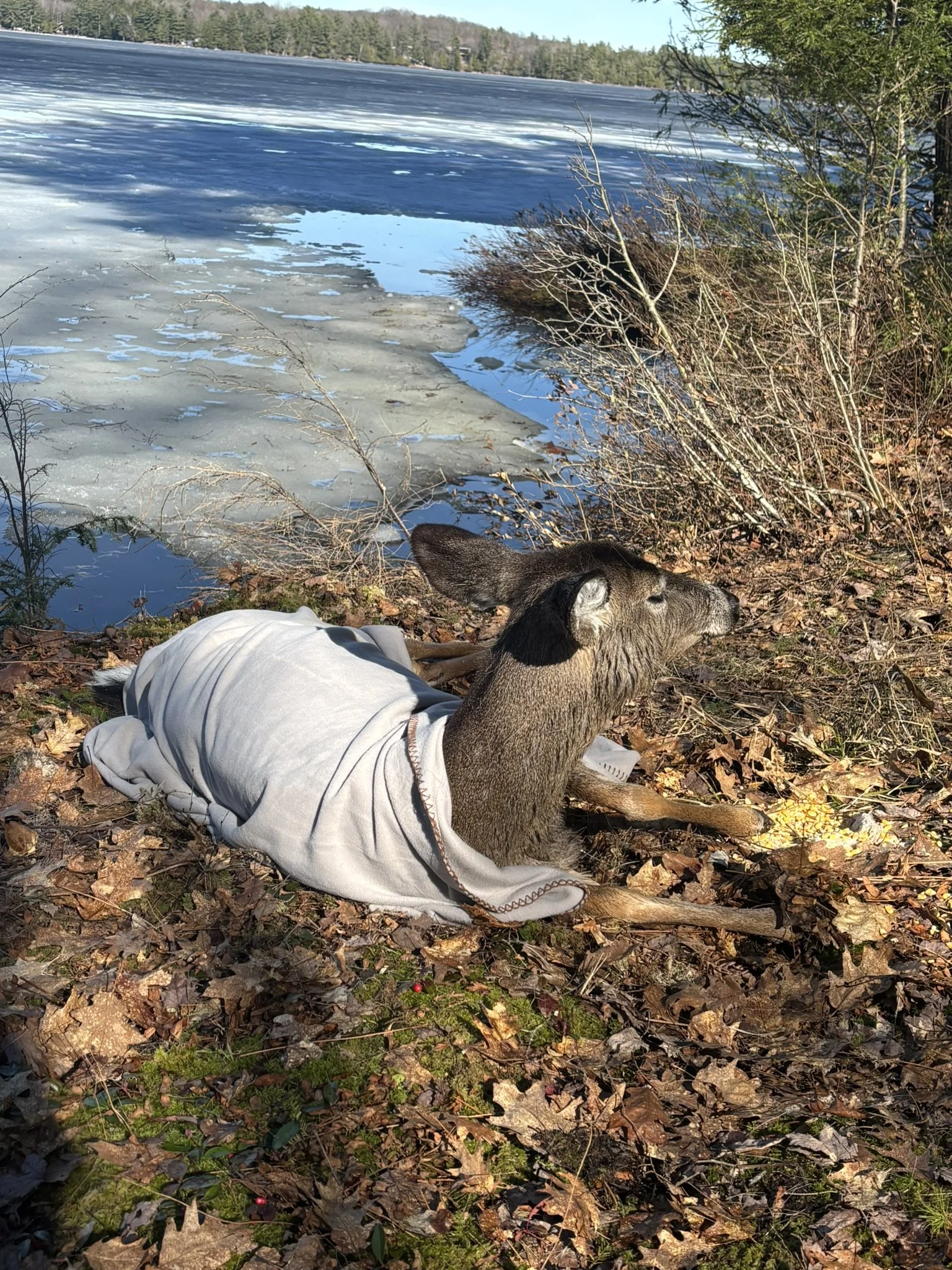
We posted the good news on social media. Most people responded the way you would expect. Relief. Pride. A good story about a good rescue.
Someone outside our circle did not see it that way. They got upset. Their argument went something like this: the deer might still die from capture myopathy later. Someone might have to find her body in the woods in a week. The rescue might have just prolonged her suffering. Why celebrate something that might still end badly.
The debate that followed was worth having. Because the question sitting underneath it is the same question I watch founders wrestle with every single week.
Was it worth trying when the outcome was uncertain?
Here is where I land. Without the rescue, the deer had zero chance. She was going to drown in that lake or freeze in that water. One hundred percent certainty of death. With the rescue, she had fifty percent. Those are not equivalent positions. They are not even close.
The person who was upset was asking the rescue to justify itself against a standard of guaranteed success. That is not how decisions work when the alternative is guaranteed failure.
The Founder Version of This Decision
Fintech founders make this exact calculation all the time. They usually do not recognize it while they are making it.
The calculation looks like this. Revenue is flat or declining. Customer acquisition costs are climbing. The marketing that worked two years ago is not working now. A campaign is not connecting. Conversion is stalling. The founder knows something has to change.
And then they stall. They wait for more information. They want to be certain before they commit. They want a plan where the outcome is guaranteed before they sign a contract, hire a leader, or rebuild the foundation underneath the business.
But the choice they are actually facing is not between a guaranteed win and a risky bet. The choice is between a fifty percent chance that something new works and a one hundred percent chance that the status quo keeps failing. Doing nothing is not neutral. The water is still cold. The ice is still melting. The deer is still flailing.
Founders who wait for certainty before they act are not protecting themselves from risk. They are choosing the guaranteed loss because it feels safer than the uncertain win. It does not feel like a decision. It feels like holding still. But holding still is a decision, and it is almost always the worst one available.
What Got You Here Will Not Get You to the Next Stage
Every founder I work with has built their company on instinct, effort, and relentless work. That instinct is real. It is what got the company to the point where it is now. But there comes a stage where instinct alone cannot touch every decision, guide every campaign, or hold every part of the business together.
Marketing becomes something that happens between urgent demands. A post here. An email there. A campaign when time allows. Revenue stays unpredictable. The founder becomes the bottleneck, not because they lack capability, but because the company has outgrown the structure underneath it.
This is the moment where the status quo stops being neutral. The company is not holding steady. It is leaking. Every month without marketing foundations is a month of lost pipeline, lost positioning, lost trust that gets harder to rebuild the longer it runs.
The founder who keeps doing what they have always done is the deer who keeps flailing in the same spot. The effort is real. The struggle is real. The water is still cold.
The Rescue Was Messy and It Worked
Let me go back to the rope tied to the kayak. That decision looks absurd on paper. You do not tie the safety line to the boat. You tie it to the person.
They did not have a perfect plan. They had ropes. They had axes. They had boats and kayaks and a friend who was willing to get in cold water. They used what they had. They adjusted when the first approach did not work. They kept going.
The fire department had a perfect protocol. It was: do not go. Animal services had a perfect protocol. It was also: do not go. The perfect protocol produced zero rescued deer.
The messy, figure-it-out-as-you-go attempt produced one rescued deer who walked back into the woods the next morning.
I am not arguing that marketing should be built on instinct alone. The opposite, actually. I build marketing foundations for a living. But I will tell you what I have learned after twenty-five years of doing this. The founders who wait for the perfect plan before they act are the ones whose companies stall. The founders who commit to building the foundation, even when they cannot see every step from where they are standing, are the ones who grow.
The foundation gets built by starting, not by planning forever.
What This Means for You
If you are a founder looking at your marketing right now and you already know it is not working, you are not waiting for more information. You have the information. You are waiting for certainty. And certainty is not coming.
The deer did not have a guaranteed rescue. She had two men who decided that a fifty percent chance was better than zero, and they acted on that math.
Your company has the same math in front of it right now. The marketing that got you here has a one hundred percent chance of continuing to underperform if nothing changes. Building the foundations that your company needs to grow past founder-led marketing has a significantly better than fifty percent chance of changing the trajectory. Not because foundations are magic. Because foundations are how growth stops depending on instinct and starts compounding on systems.
The status quo is not neutral. It is a choice. And it is the one choice that guarantees the outcome you are already not happy with.
What Do You See When You Look at Your Marketing?
Before any founder commits to rebuilding marketing foundations, they need to see what is actually happening underneath the surface. The patterns. The gaps. The places where growth is leaking.
I put together a document called The Patterns Holding You Back. It is a founder-specific diagnostic that names the gaps between where your marketing is and where your foundations need to be, and what those gaps are costing you. You get a clear view of what I see when I look at your business, so you can decide your next move with better information than you have today.
If you are sitting on the edge of the lake watching your marketing flail and wondering whether to try something new, this is where I would start.
Request The Patterns Holding You Back →
Mandy MacPhee is a Fractional CMO and Marketing Integrator who helps fintech founders build the marketing systems their companies need to grow past what instinct and effort alone can carry. She is the author of The Work That Holds You: Building Marketing Systems by Understanding the Patterns That Hold You Back, and the co-host of the CMO's Without Borders podcast.