
The propeller hit my left hand. I’m left-handed.
Key Illuminated Insight
At 18, a boat propeller cut all five tendons in my left hand, the one I write with, during my final year of high school. I got through that year by trial and error with a pencil in my right hand, and by trusting classmates I barely knew to take my notes. A lot of founders are writing with their right hand right now. Trial and error will get them through, and the people in it with them decide how long it takes.
Step into full illumination.
I was 18 when I fell out of a fast-moving boat on a sharp corner and rolled under it. I wasn't wearing a life jacket.
It happened in slow motion. I can still replay every second.
When I came up, I was treading water and holding my left hand. I felt calm. I didn't think I'd been cut, only that I'd broken it. Then I looked down and saw the blood in the water.
My cousin was driving. The moment she saw me go over, she pulled the throttle up, and that split-second decision is what saved my hand. A boater nearby stopped to help her and my sister pull me into the boat. A friend at a cottage close by jumped in and swam over to help.
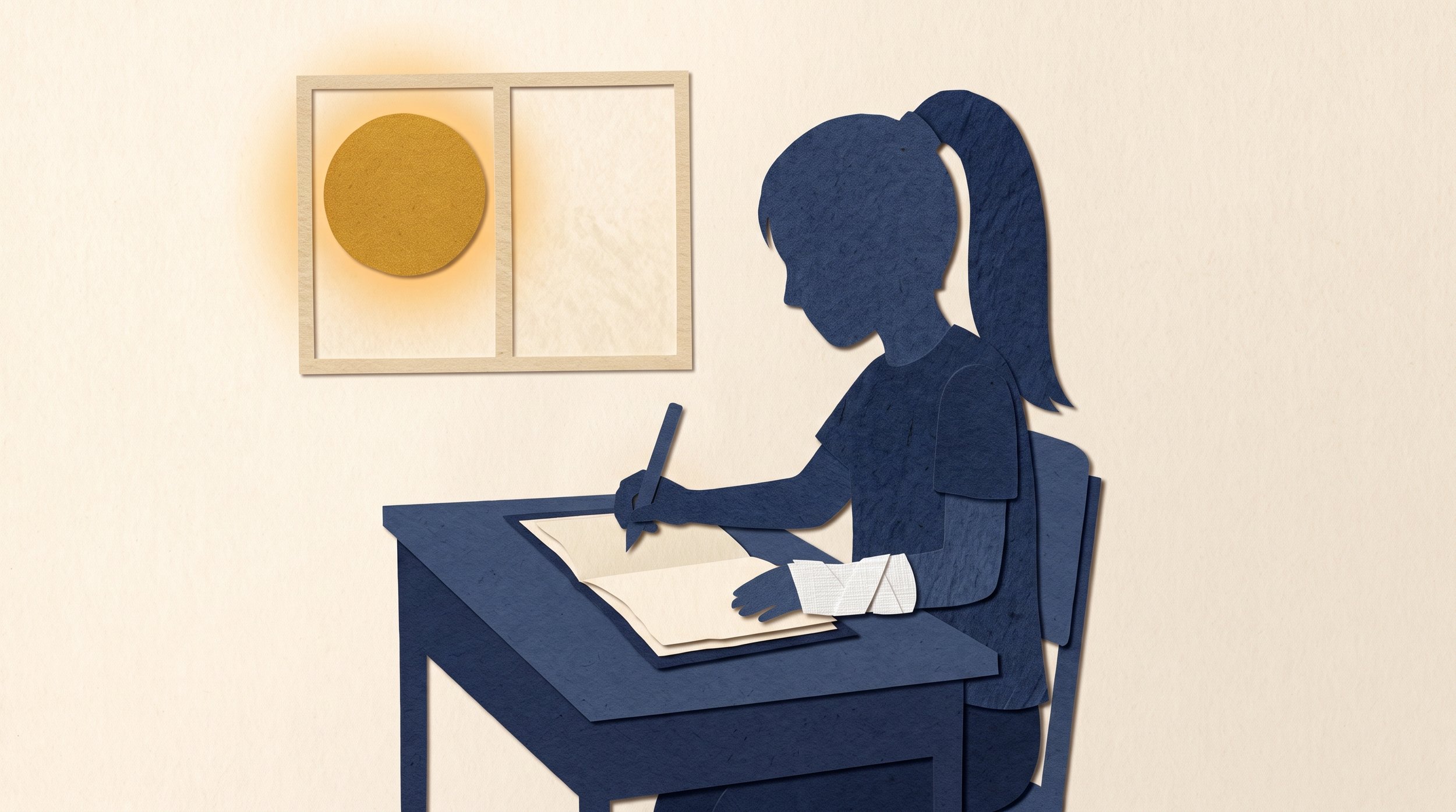
I needed 52 stitches. All five tendons were cut, three fingers were broken and there was nerve damage. Wires held the bones in place, and one of them is still wrapped in there today. Recovery took a year of physiotherapy.
It was my left hand. I'm left-handed. And it was my last year of high school.
School didn't stop, so I had to learn to write with my right hand. Anyone who has tried knows how hard that is. I worked through pens, markers and every other writing instrument I could find, and almost everything came out unreadable. The only thing that gave me some legibility was a pencil. So I used a pencil for everything.
This was before laptops and iPads. There was no shortcut, only trial and error.
Even with the pencil, I couldn't keep up in class. I had to ask classmates I'd never spoken to before to write notes for me, and I studied from their notes, in their handwriting, for the rest of the year. Asking didn't come easily. I had always done things myself. Trusting people I barely knew with something that mattered is a big part of why I finished that year, and I built relationships I would never have built otherwise.
Perseverance and determination got me through. So did the people who stepped in.
What happens when founders run marketing with their non-dominant hand?
A lot of founders are writing with their right hand right now. Marketing isn't the skill they built the company on, and they're running it themselves anyway, by trial and error. Some of it works. Plenty of it comes out unreadable the first time. Most founders find their pencil eventually, and it can take a year to get there.
Who should hold the work with you?
Someone who is in it with you. Every person who helped me through that year sat in the same classroom. Every person who helped me the day of the accident was in the boat or in the water.
That's the seat I take as a fractional CMO. I sit on the executive team, carry the marketing KPIs and build the foundations alongside the founder. The role is long-term temporary by design. I stay until the company needs, and can support, a full-time CMO and team, and then I hand over the seat.
It's also the idea at the centre of my book, The Work That Holds You. When you understand the work that holds you, you begin to understand how to build work that can hold others.
I have full use of my left hand again. There's still a wire wrapped inside it, and most days I forget it's there.
The Work That Holds You is my book for founders on recognising the patterns that hold growth back and building marketing that holds. It comes with a workbook that includes an AI prompt guide and a self-assessment you can use to evaluate your own marketing foundations. Get it on Amazon
Frequently asked questions
What does a fractional CMO do?
A fractional CMO is an embedded executive who sits on a company's leadership team part-time, owns marketing strategy and KPIs, and builds the foundations and team the company needs. The role lasts until the company is ready to support a full-time CMO.
When should a founder bring in a fractional CMO?
When marketing still runs on the founder's instinct and trial and error, growth has become hard to predict, and the company isn't yet at the stage to support a full-time CMO and team.
What is The Work That Holds You about?
It's Mandy MacPhee's book for founders of fintech and financial services companies. It helps them recognise the leadership and marketing patterns that stall growth and shows how to build marketing systems that hold. It comes with a workbook that includes an AI prompt guide and a self-assessment founders can use to evaluate their own marketing foundations.